460 Greentree Rd Building 1, Sewell, NJ 08080
825 S Delsea Dr #9b, Vineland, NJ 08360
Get Started
Try Out Personal Training in Sewell
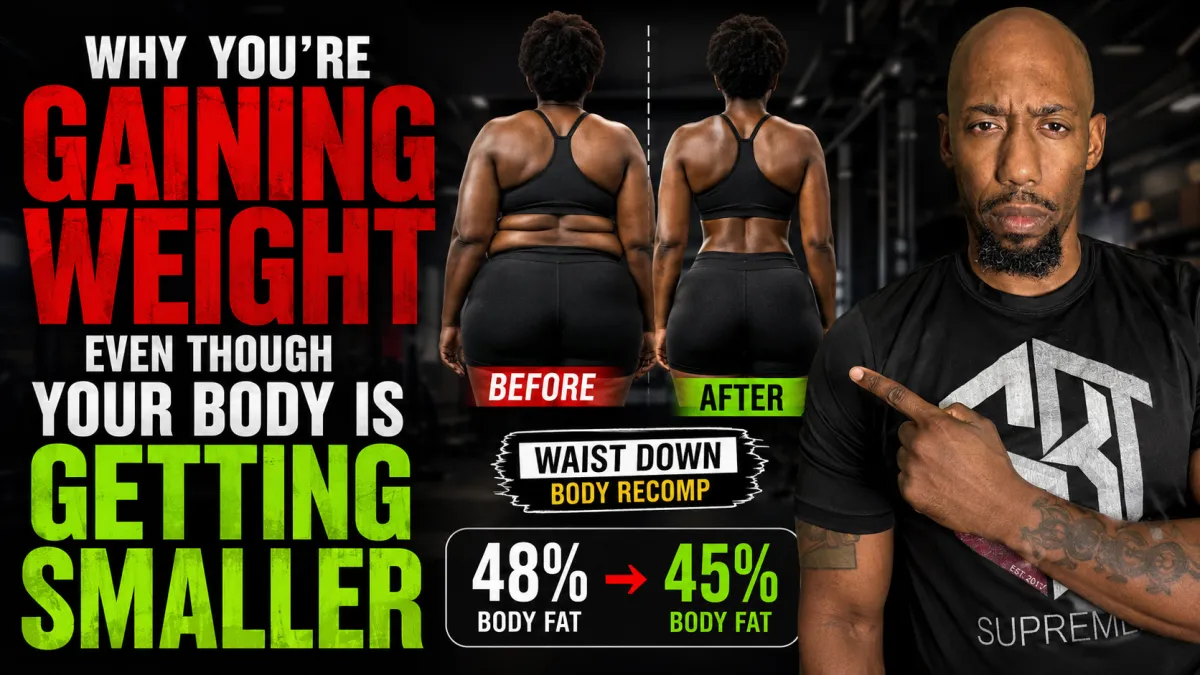
Why You’re Gaining Weight While Your Body Is Getting Smaller
Why the Scale Can Be Misleading: Understanding Fat Loss, Muscle Gain, and Body Recomposition
When someone follows a meal plan, trains consistently, and shows up every week, they naturally expect the number on the scale to keep dropping.
But what happens when the scale goes down, then rises again?
That is exactly what happened in this member’s journey. Her weight began at 276 pounds, dropped to 268 pounds, and later increased to 272 pounds. Looking only at the scale, this could feel disappointing. However, her body-composition data told a very different story.
Looking Beyond Body Weight
Body weight alone cannot show whether a person is losing fat, gaining muscle, retaining water, or experiencing several changes at the same time.
One pound of muscle and one pound of fat weigh the same, but muscle is denser and takes up less space. This means someone can become smaller, stronger, and leaner without seeing a dramatic decrease on the scale.
That is why understanding body composition is essential when evaluating fitness progress.
What Her Body-Fat Results Revealed
During her earlier assessment, her body-fat percentage was approximately 48%. Her following measurements showed a decrease to 47% and later to 45%.
Using the reported figures:
At 276 pounds and 48% body fat, her estimated fat mass was approximately 132.5 pounds.
At 272 pounds and 45% body fat, her estimated fat mass was approximately 122.4 pounds.
This suggests a reduction of around 10 pounds of body fat, even though the scale showed only a four-pound difference from her starting weight.
The important result was not simply that her total weight changed. Her estimated fat mass decreased while her muscle mass increased.
The Value of the 3D Body Scan
The 3D Body Scan helps members look beyond a single number on the scale by tracking visible changes in body shape and circumference measurements.
Her scan showed meaningful reductions around her waist and other areas of her body. One waist measurement decreased by approximately 2.4 inches, while another area showed a reduction of about 2.2 inches.
By comparing previous and current scans, she was able to see where her body had become smaller, even when the scale suggested that her weight had increased.
This is one of the greatest benefits of progress tracking. It provides a clearer picture of how the body is changing over time.
Gaining Muscle While Losing Fat
Her muscle-mass reading increased from approximately 136 pounds to around 142 pounds, representing an increase of nearly six pounds.
Muscle gain is usually a gradual process influenced by training experience, nutrition, recovery, genetics, and the accuracy of the measurement method. Body-composition readings can also change based on hydration and testing conditions, so results are best evaluated as a long-term trend rather than a single measurement.
In her case, the overall trend showed positive body recomposition: less estimated body fat, more muscle, and smaller waist measurements.
What Is Body Recomposition?
Body recomposition means reducing body fat while maintaining or increasing muscle mass.
This process may not always produce rapid changes on the scale. In some cases, weight may stay the same or increase slightly because muscle is being developed while fat is being reduced.
Signs of successful body recomposition may include:
Smaller waist and body measurements
Improved strength and fitness
Clothing fitting differently
Lower body-fat percentage
Increased or maintained muscle mass
Visible changes in body shape
These results can provide a more complete picture than scale weight alone.
Why Knowing Your Numbers Matters
If someone only saw her weight increase from 268 to 272 pounds, they might assume that her progress had stopped.
However, the combination of her body-composition results, 3D Body Scan comparisons, and waist measurements showed that she was continuing to move toward her goals.
The scale was not telling the full story.
This is why members should evaluate several progress markers instead of allowing one measurement to determine how they feel about their journey.
Consistency Produces Results
Her progress reflects the value of consistent training, proper nutrition, recovery, and accurate progress tracking.
Changes in body composition take time. Some weeks may show a lower number on the scale, while other weeks may reflect changes in muscle, hydration, or normal weight fluctuations.
The goal is not simply to weigh less. The goal is to build a healthier, stronger, and more capable body.
A Message for the Supreme Warriors Community
Do not allow the scale to erase the progress you have worked hard to achieve.
Know your numbers. Track your body-fat trends, muscle mass, measurements, strength, and overall well-being. Use tools such as the 3D Body Scan to understand what is happening beneath the surface.
Your weight may fluctuate, but that does not automatically mean you are moving backward.
At Supreme Body Training, we help members focus on meaningful and measurable progress, not just the number shown on the scale.
Are you ready to understand your results more clearly? Schedule your 3D Body Scan and discover how your body is truly changing.
Important correction: I removed several inaccurate claims from the transcript, including the statement that five pounds of muscle burns 251 calories per day at rest. That figure is not scientifically realistic. I also changed the fat-loss estimate from nine pounds to approximately ten pounds based on the numbers provided.

Come Visit Our Gym
460 Greentree Rd Building 1, Sewell, NJ 08080
Come Visit Our Gym
825 S Delsea Dr #9b, Vineland, NJ 08360

Copyright ©2025 Supreme Body University | All Rights Reserved
This site is not a part of Facebook or Facebook Inc. Additionally, this site is NOT endorsed by Facebook in any way.