Before, During & After Menopause: What Every Woman Should Know About Hormones, Fat Loss, and Preparing for Midlife
Before During and After Menopause: What Every Woman Should Know About Hormones, Fat Loss, and Preparing for Midlife
A lot of women reach their 40s and start asking the same question:
“Why does my body suddenly feel different?”
Maybe the weight that used to come off easily is harder to lose. Maybe more fat is showing up around the stomach. Sleep is different. Energy is unpredictable. Workouts feel harder to recover from, and the strategies that worked years ago no longer seem to produce the same results.
For many women, this is not happening overnight.
It may be part of perimenopause, the transition leading up to menopause.
Perimenopause is a normal stage of life. During this time, estrogen and progesterone begin changing, menstrual cycles may become less predictable, and symptoms such as hot flashes, sleep problems, mood changes, and difficulty concentrating can appear. Menopause itself is reached after 12 consecutive months without a menstrual period.
The important thing to understand is this:
Your body has not stopped working. But the strategy that worked at 25 may need to change at 45.
1. Understand the Transition Before Blaming Yourself
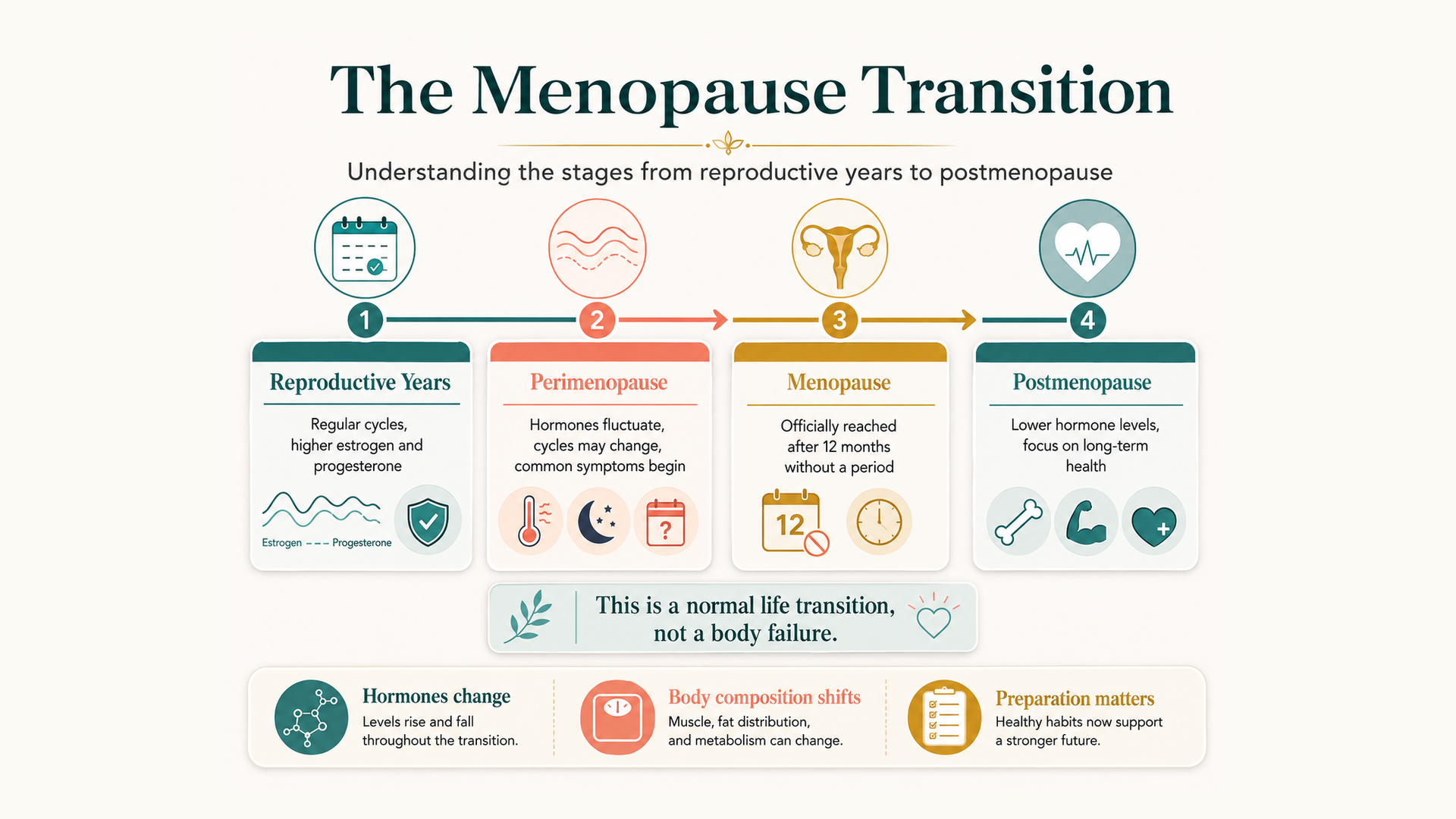
Menopause is not something that suddenly happens one morning.
Before menopause comes perimenopause, which can last for several years.
During this stage, hormone levels do not always decline in a smooth, predictable line. They can fluctuate, which is one reason women may feel completely normal one month and notice significant changes the next.
Periods may become shorter, longer, heavier, lighter, or more irregular. Some women experience hot flashes or night sweats. Others notice sleep problems, irritability, mood changes, fatigue, or difficulty concentrating.
Every woman experiences this stage differently.
That is why it is important to stop comparing your experience with someone else’s.
The first step is simply understanding what is happening.
Key takeaway:
Hormonal changes are real, but perimenopause is a normal transition, not a sign that your body has failed.
2. Why Fat Loss Can Start Feeling Different
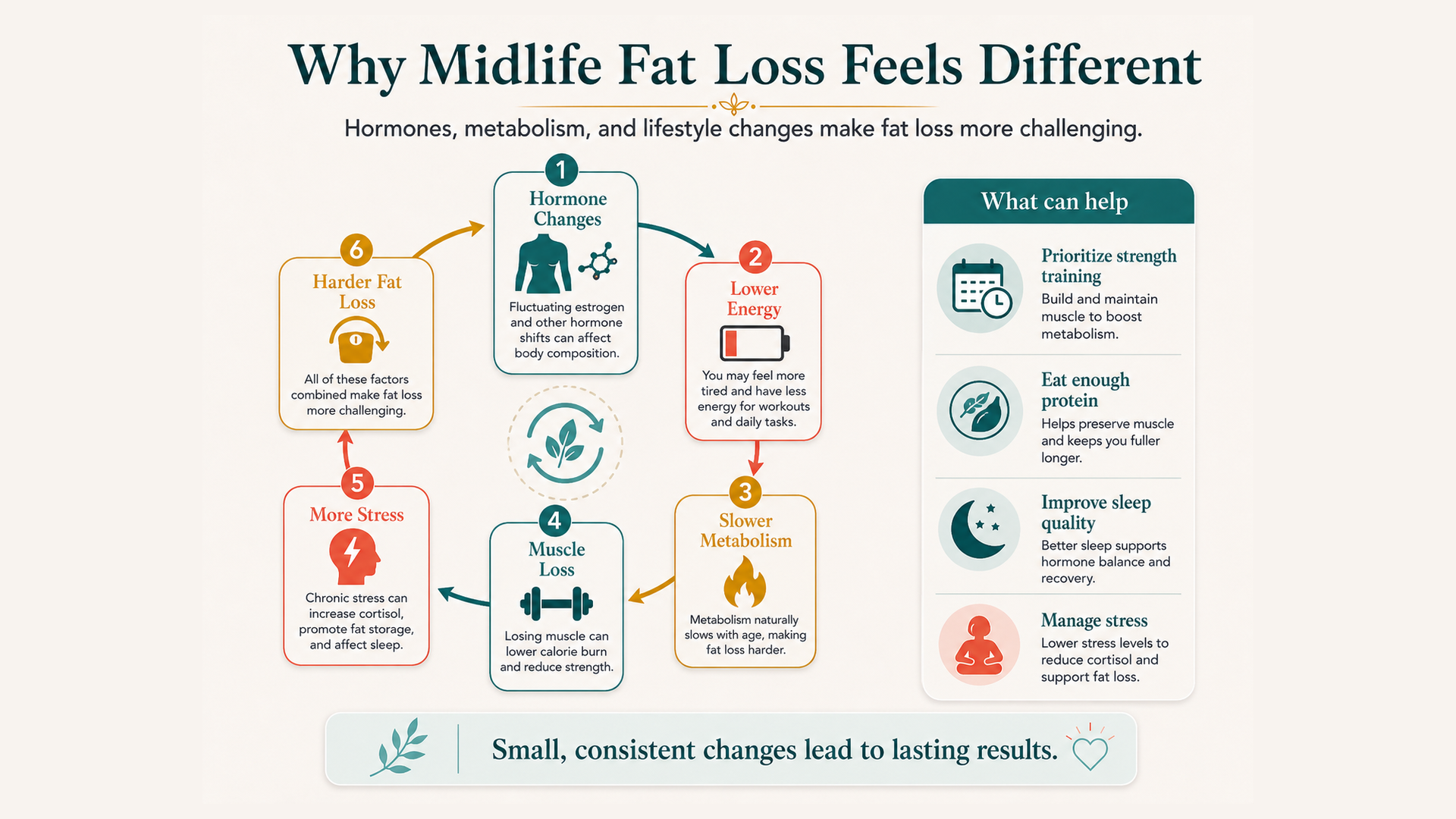
One of the most common concerns during midlife is increased weight around the stomach.
But hormones are only one part of the picture.
During the menopause transition, women can experience changes in body composition and fat distribution. At the same time, aging, changes in physical activity, sleep disruption, stress, eating habits, and gradual loss of muscle can all influence weight.
This distinction matters.
Saying “my hormones made me gain weight” can make it feel like there is nothing you can do.
The reality is more useful.
Hormonal changes may influence where your body stores fat, while lifestyle and age-related changes affect the bigger picture.
That means your approach can change too.
Instead of simply eating less and doing more cardio, midlife fat loss should focus increasingly on body composition, muscle preservation, nutrition, movement, sleep, and recovery.
The scale is only one measurement.
How strong you are, how much muscle you maintain, your waist measurement, energy, health markers, and how you physically feel also matter.
Key takeaway:
Midlife fat loss may become more challenging, but it is not impossible. Your strategy simply needs to match the stage of life you are in.
3. Muscle Becomes More Important Than Ever
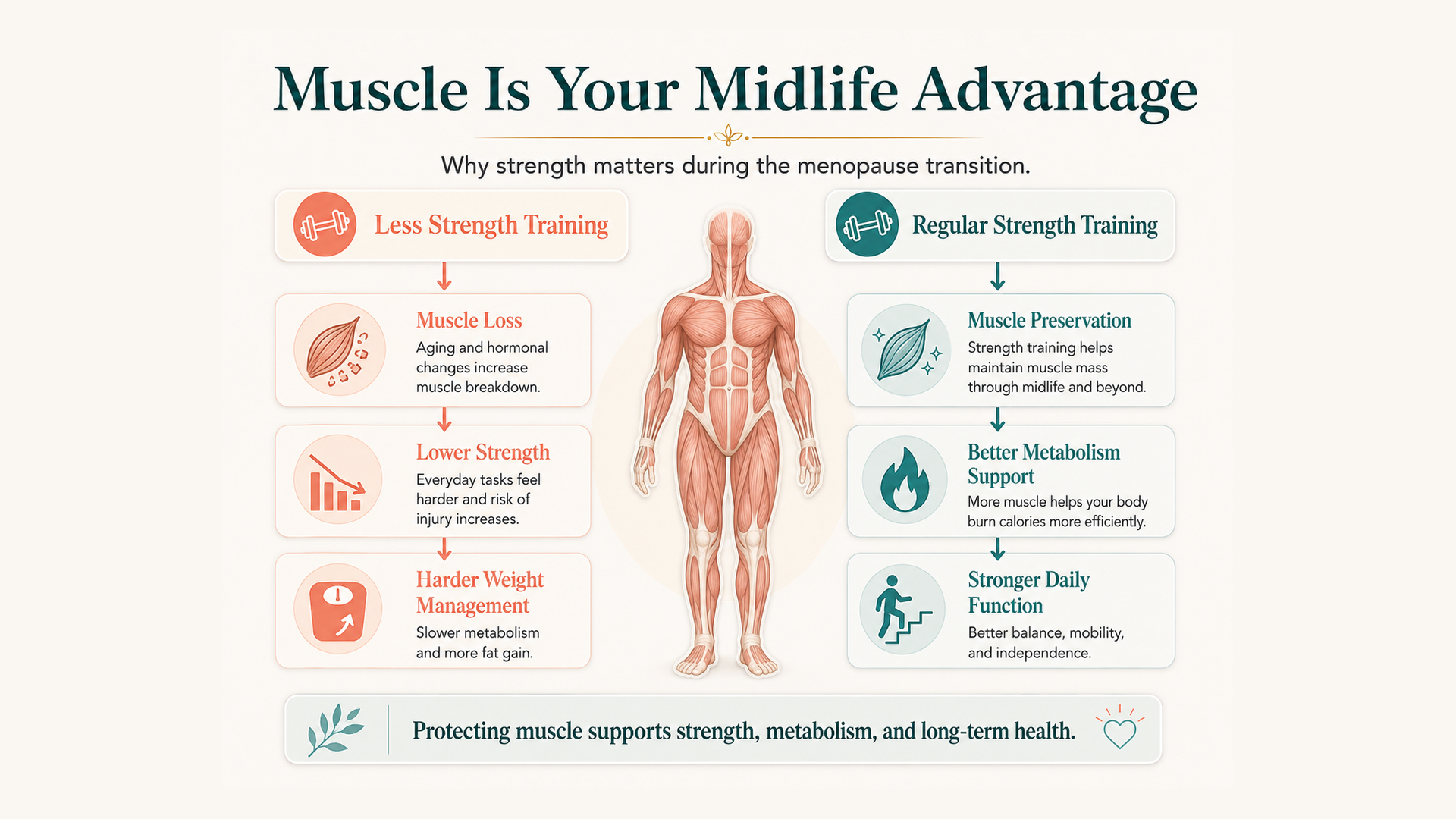
One of the biggest mistakes women can make during this stage is focusing only on losing weight.
Your goal should also be to protect muscle.
As we age, maintaining muscle becomes increasingly important for strength, mobility, metabolism, independence, and long-term health.
This is why strength training matters so much during midlife.
Resistance training gives your body a reason to maintain muscle rather than simply focusing on burning calories.
Walking and cardio are still useful, but they do not replace strength training.
The Menopause Society recommends regular physical activity along with resistance training as part of managing weight and health during midlife.
Instead of asking only:
“How many calories did I burn today?”
Start asking:
“Am I building a body that will still be strong ten or twenty years from now?”
That is a much better long-term goal.
Key takeaway:
You do not just want a smaller body. You want a stronger body.
4. Stop Eating Less and Start Eating Better
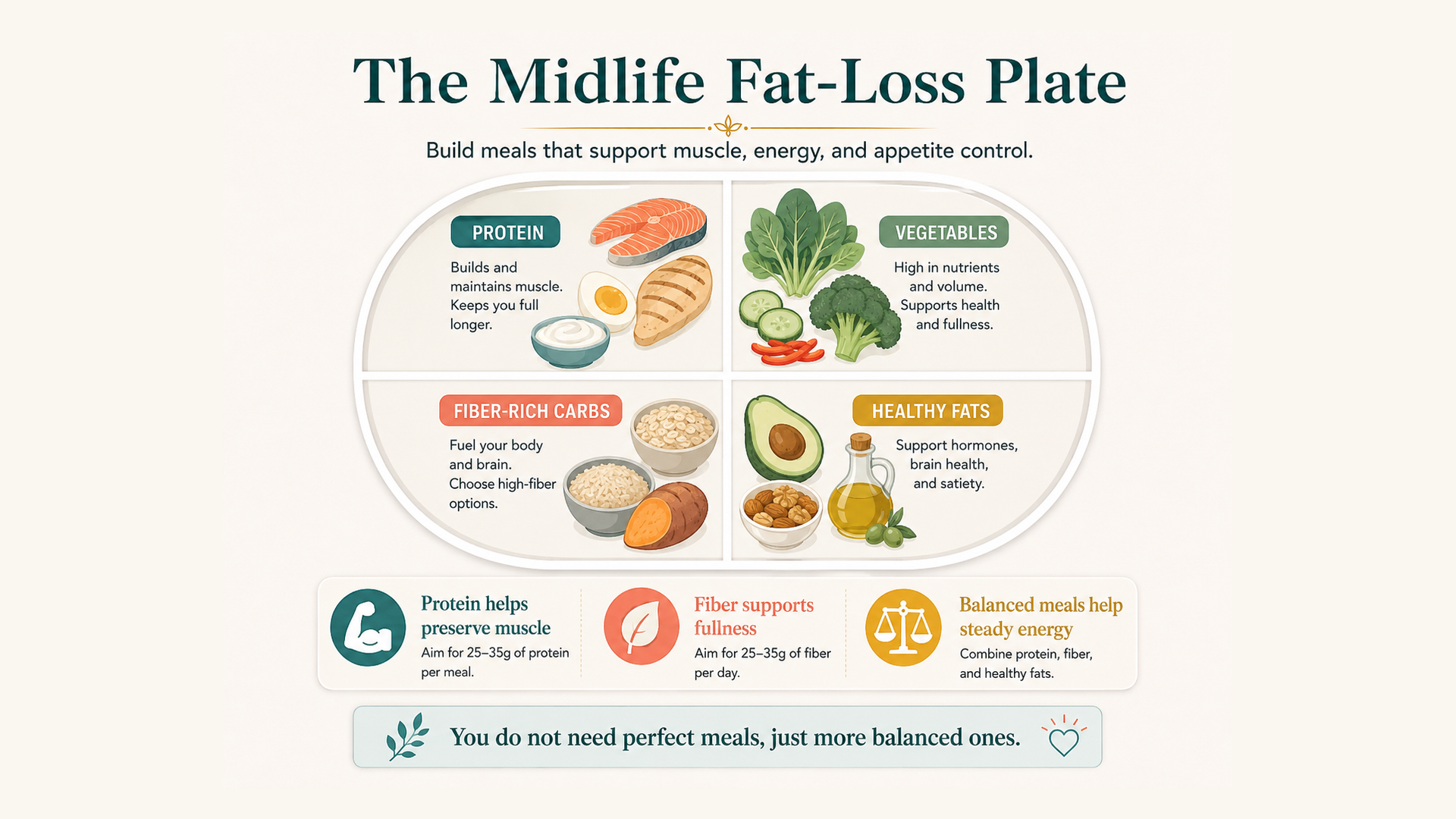
When weight loss gets harder, the natural reaction is often to cut food even more.
But constantly eating less is not always the best answer.
During midlife, your meals need to support muscle, energy, training, and appetite control.
Protein becomes especially important because it helps support lean muscle.
The Menopause Society recommends a balanced eating pattern with adequate protein, vegetables, fruits, and whole grains as part of healthy midlife weight management.
Think about building meals instead of simply removing foods.
Start with a quality protein source.
Add vegetables or fruit.
Include fiber-rich carbohydrates based on your activity level and preferences.
Add healthy fats in reasonable portions.
You do not have to eliminate carbohydrates.
You do not have to live on salads.
And you do not need to follow an extreme diet.
You need meals that are nutritious enough to support your body and satisfying enough that you can maintain the plan.
Key takeaway:
The goal is not to eat as little as possible. The goal is to eat in a way that supports muscle, health, and sustainable fat loss.
5. Sleep Is Part of Your Fat-Loss Strategy
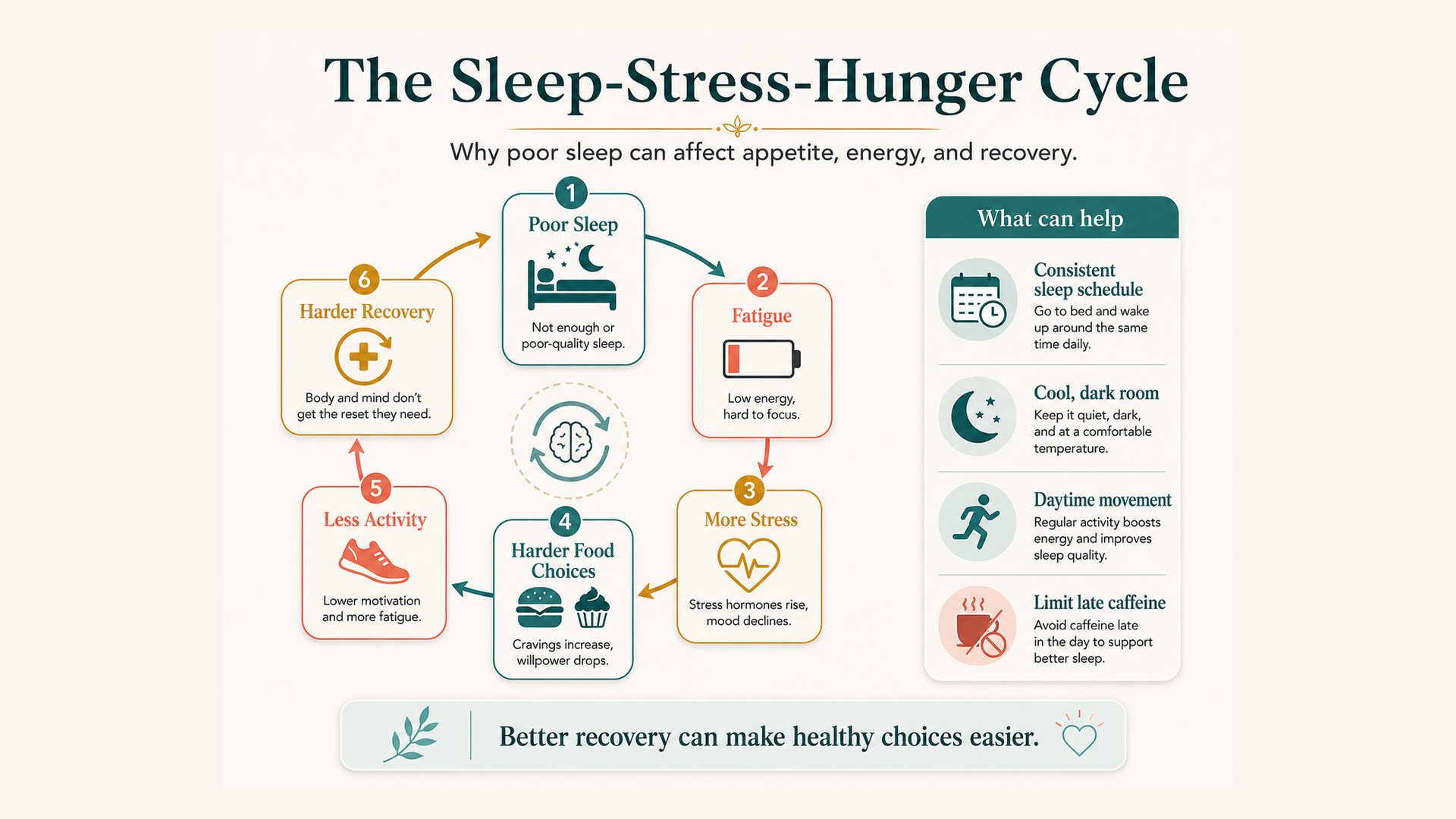
You can have a great workout program and a reasonable nutrition plan, but poor sleep can make both harder to follow.
Sleep problems are common during perimenopause and menopause.
Night sweats and hot flashes can interrupt sleep, and some women find it difficult to fall asleep or stay asleep. Poor sleep can then contribute to fatigue, stress, mood changes, and difficulty maintaining healthy habits.
Think about what happens after a terrible night of sleep.
You wake up exhausted.
You may skip your workout.
You rely on more caffeine.
You have less patience.
Convenient food becomes more appealing.
And by the end of the day, you are simply trying to get through it.
That is not a lack of discipline.
It is another reason recovery needs to be treated seriously.
Keeping a regular sleep routine, staying physically active, managing stress, and creating a cool and comfortable sleep environment may help with menopause-related sleep problems.
Key takeaway:
Recovery is not time away from your plan. Recovery is part of the plan.
6. Hormone Changes During Perimenopause
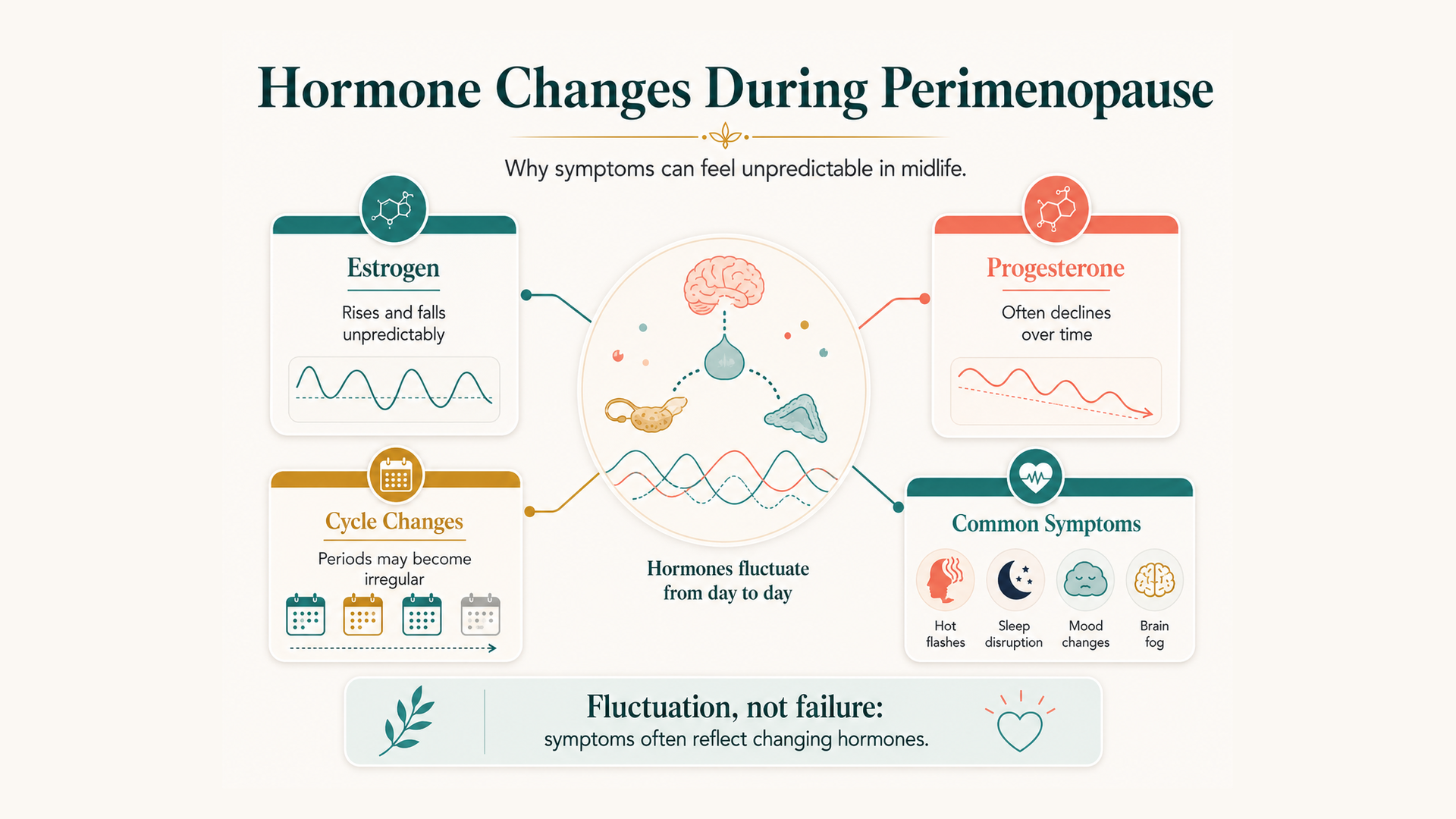
During perimenopause, estrogen and progesterone can begin changing in ways that feel unpredictable. Estrogen may rise and fall from month to month, while progesterone can gradually decline as ovulation becomes less consistent.
Because these hormones affect many systems in the body, women may begin noticing changes in their menstrual cycle, sleep, mood, energy, and concentration.
Some months may feel completely normal, while others may bring stronger symptoms such as hot flashes, night sweats, mood changes, or brain fog.
This is one reason perimenopause can feel confusing. The changes do not always happen in a straight line.
Understanding these hormone shifts can help you recognize that what you’re experiencing may be part of the transition, and it can also help you make better decisions about your training, nutrition, recovery, and when to speak with a healthcare professional.
7. Prepare for Menopause Before You Reach It
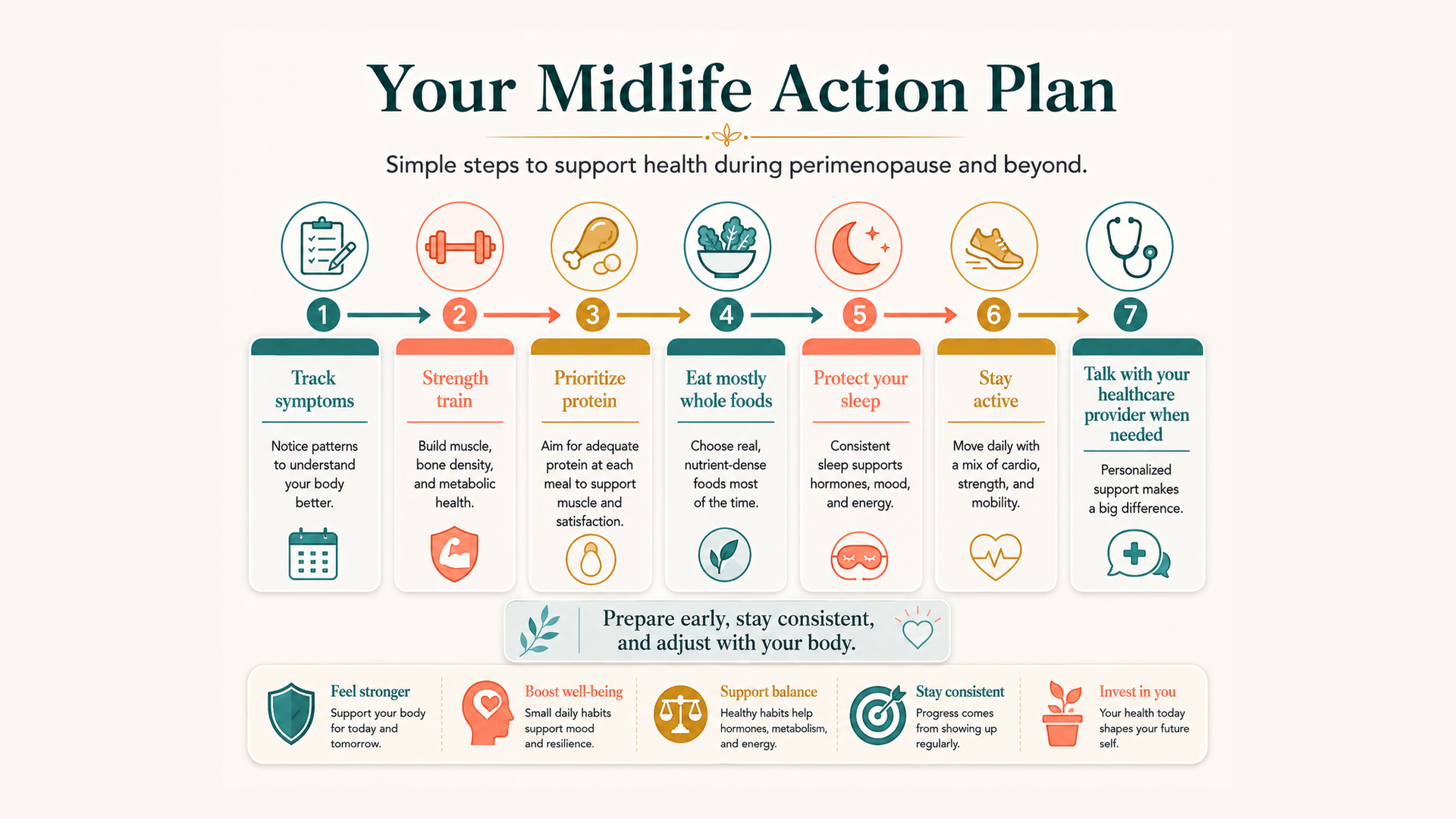
This may be the most important part.
Do not wait until menopause to start thinking about your health.
What you do during perimenopause can help prepare you for the years ahead.
Start paying attention to changes in your cycle and symptoms.
Build strength.
Protect your muscle.
Improve the quality of your food.
Take sleep seriously.
Stay physically active.
And do not hesitate to talk with a qualified healthcare professional when symptoms begin interfering with everyday life.
There are different approaches to managing menopause symptoms, including lifestyle changes, nonhormonal treatments, and hormone therapy for appropriate patients. The right choice depends on symptoms, medical history, risks, and individual preferences.
Menopause is also important because after menopause, maintaining bone and cardiovascular health becomes increasingly important. Staying active and maintaining a healthy diet are part of protecting long-term health.
You are not preparing simply to lose a few pounds.
You are preparing to remain strong, active, mobile, and independent for decades.
The Bottom Line
Your body changing during midlife does not mean your best years are behind you.
But it does mean you may need to stop using the exact same strategy you used when you were younger.
Perimenopause can bring hormonal changes.
Aging can affect muscle and energy needs.
Poor sleep can make healthy habits harder.
Stress matters.
Activity matters.
Nutrition matters.
And strength matters more than many women realize.
The answer is not starving yourself.
It is not spending hours doing cardio.
And it is not blaming every change on hormones.
The answer is understanding what is happening and adjusting your strategy accordingly.
Build muscle. Eat to support your body. Protect your sleep. Stay active. Track your symptoms. Get professional medical support when needed.
Because the real goal is not simply to weigh less.
The goal is to enter menopause stronger, healthier, and better prepared for the next stage of your life.
This article is for educational purposes only and is not a substitute for individualized medical advice.