460 Greentree Rd Building 1, Sewell, NJ 08080
825 S Delsea Dr #9b, Vineland, NJ 08360
460 Greentree Rd Building 1, Sewell, NJ 08080
825 S Delsea Dr #9b, Vineland, NJ 08360
Get Started
Try Out Personal Training in Sewell
Get Started
Try Out Personal Training in Sewell
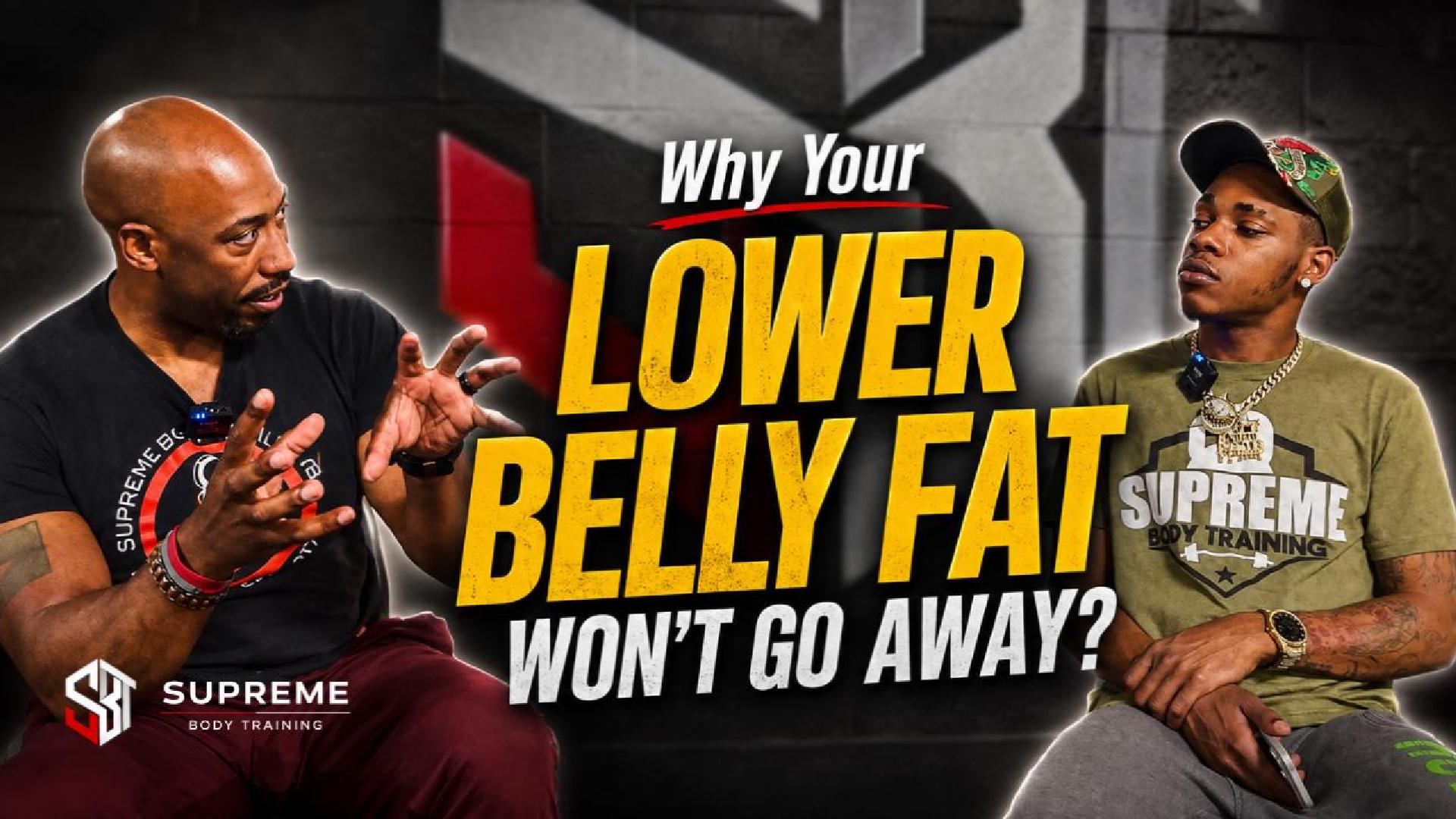
Why Your Lower Belly Fat Won’t Go Away?
Why Your Lower Belly Fat Won’t Go Away
Lower belly fat can be one of the most frustrating areas to change.
You may be exercising consistently, trying to eat better, and doing everything you think should work, yet that stubborn area around your lower stomach still seems to stay exactly where it is.
The problem is that losing belly fat isn’t simply about doing more crunches or spending more time in the gym.
Your nutrition, daily habits, overall calorie intake, activity level, age, genetics, sleep, and hormones can all influence where your body stores fat and how easily you lose it.
So if your lower belly isn’t changing, it may be time to look beyond the workout itself.
You Can’t Choose Where Your Body Burns Fat First
One of the biggest misconceptions about fat loss is that you can target a specific area of your body.
Doing hundreds of abdominal exercises can strengthen your core, but it doesn’t guarantee that the fat covering your stomach will disappear first.
Your body determines where fat is stored and where it comes off based partly on genetics, age, sex, and hormonal factors.
For many women, the abdominal area can become especially challenging as they get older. Hormonal changes around menopause, for example, can shift fat distribution toward the abdomen.
That means the solution isn’t to attack your stomach with more exercises.
The goal is to reduce overall body fat while building and maintaining muscle.
Your Eating Habits Matter More Than You Think
Think about how long your eating window is each day.
Maybe you eat breakfast at 7:00 AM, grab a snack at 10:00, eat lunch around noon, have another snack in the afternoon, eat dinner at 7:00, and then have something else before bed.
Even when individual meals seem small, those calories can add up quickly.
If you consistently consume more energy than your body uses, some of that excess energy can eventually be stored as body fat.
Weight management is influenced by several factors, but long-term energy balance remains an important part of whether body weight increases or decreases.
This is why having structure around your meals can be powerful.
Instead of eating randomly throughout the entire day, create a nutrition schedule that helps you control portions, prioritize nutrient-dense foods, and reduce unnecessary snacking.
For some people, a shorter eating window or intermittent fasting can be a useful tool because it provides structure and may make calorie control easier.
But fasting isn’t magic.
It still matters what and how much you eat.
Insulin Is Important, But It Isn’t the Only Factor
You may have heard people describe being in either “fat-storage mode” or “fat-burning mode.”
The reality is more complicated.
Your body constantly shifts between storing and using energy depending on what you eat, your activity, hormones, and your overall energy needs.
Insulin is one hormone involved in this process. Insulin rises after eating, particularly after meals containing carbohydrates and protein, and helps move nutrients into cells.
Between meals and during periods when energy is needed, your body can increase the release of stored energy, including fatty acids from fat tissue.
But simply keeping insulin low does not automatically guarantee fat loss.
Successful long-term fat loss still requires a nutrition and activity strategy that helps you consistently use more energy than you store.
Exercise Still Matters, Especially Strength Training
If you want your body composition to change, resistance training should be part of the plan.
Strength training helps you maintain and build muscle while losing weight.
That matters because muscle contributes to your daily energy expenditure and gives your body the stronger, more defined appearance most people are actually looking for.
Combine resistance training with regular cardiovascular activity and increased daily movement.
Walking, cycling, conditioning workouts, group fitness, and other forms of activity can all contribute.
Major health organizations recommend combining a sustainable eating plan with regular physical activity for long-term weight management.
The goal isn’t to punish yourself with exercise.
The goal is to build a routine you can repeat week after week.
Don’t Confuse Bloating With Body Fat
Another mistake is assuming that every protruding stomach is body fat.
Temporary bloating, digestive issues, constipation, food volume, and fluid retention can all change the appearance of your abdomen.
But that doesn’t mean someone has pounds of “toxins” or waste that needs to be flushed from their body.
Colon cleanses and colon hydrotherapy have not been proven to be effective fat-loss treatments, and they can cause side effects in some people.
If you’re experiencing persistent abdominal swelling, significant constipation, pain, or sudden unexplained changes to your stomach, talk with a qualified healthcare professional instead of assuming the problem is body fat.
Your Daily Routine Can Be the Missing Piece
The most successful transformations usually aren’t created by one extreme workout or one perfect meal.
They come from structure.
A strong fat-loss routine might include:
A consistent nutrition plan
Adequate protein
Portion control
Strength training
Cardiovascular exercise
Daily movement
Adequate sleep and recovery
A consistent meal schedule
Regular progress tracking
Accountability
You don’t need perfection.
You need enough consistency for your habits to produce results over time.
Stop Guessing and Start Following a Plan
One of the biggest reasons people struggle with fat loss is that they are constantly changing strategies.
They diet for a week.
Then they stop.
They start working out.
Then they disappear for two weeks.
They eliminate carbohydrates.
Then they overeat on the weekend.
The cycle continues because there is no structure.
Knowledge comes first.
When you understand what to eat, how much to eat, how to train, and what habits need to change, fat loss becomes much easier to manage.
That’s why having a structured program and accountability can make such a major difference.
Instead of waking up every morning wondering what you should eat or what workout you should do, you already have a plan.
You simply need to execute it.
Your Lower Belly Isn’t the Real Problem
The lower belly is often just the place where you notice the problem.
The real issue may be the collection of habits happening throughout your day.
Your nutrition.
Your portions.
Your activity.
Your training.
Your sleep.
Your consistency.
Your environment.
Change those consistently, and your body has an opportunity to change with them.
There is no single exercise, cleanse, supplement, or shortcut that specifically melts lower belly fat.
But there is a proven foundation: better nutrition, regular activity, strength training, recovery, and consistency.
At Supreme Body Training, we help people stop guessing and start following a structured approach designed to help them burn fat, build strength, and create sustainable habits.
If you’re tired of trying different strategies without knowing what actually needs to change, it may be time to get a clear plan.
Ready to burn fat and get stronger? Contact Supreme Body Training and take the first step toward building a body and lifestyle you can maintain.

Copyright ©2026 Supreme Body Training | All Rights Reserved
This site is not a part of Facebook or Facebook Inc. Additionally, this site is NOT endorsed by Facebook in any way.